
Permanent acoustic barrier systems for infrastructure noise control
Air's permanent external acoustic barrier systems deliver certified DLR 28-29 dB performance for infrastructure projects, with planning advantages and lifecycle value for developers managing noise-sensitive boundaries. The system supports specification-led noise control for highways, rail, utilities, industrial sites and mixed-use development boundaries.
Overview
Infrastructure projects increasingly require permanent external acoustic barriers to manage noise impact on surrounding communities and meet planning requirements. Effective acoustic barrier systems must balance proven sound reduction performance with practical installation, long-term durability, and community acceptance. Air's modular acoustic barrier approach addresses these requirements through certified performance testing, sustainable material choices, and installation flexibility that supports project timelines and budget control. For developers managing highway, rail, utilities, industrial, or mixed-use projects near noise-sensitive receptors, understanding acoustic barrier specification, performance standards, and planning considerations ensures successful project delivery and community acceptance.
Permanent infrastructure acoustic barrier requirements
Permanent infrastructure acoustic barriers serve multiple functions beyond noise reduction, including visual screening, boundary definition, and community reassurance during planning processes. Performance requirements vary significantly between highway corridors, rail infrastructure, utilities, industrial sites, and mixed-use developments, with different noise characteristics, receptor sensitivities, and planning policy frameworks. Effective acoustic barriers must demonstrate measurable sound reduction performance through standardised testing, typically achieving DLR values between 20-30 dB depending on application requirements. Material selection influences both acoustic performance and long-term project value, with considerations including weather resistance, maintenance requirements, visual impact, and end-of-life material recovery. Planning authorities increasingly expect acoustic barrier proposals to address sustainability, community impact, and lifecycle performance rather than focusing solely on immediate noise reduction. Developers benefit from early acoustic barrier specification that integrates with overall project design, construction sequencing, and community engagement strategies.
Key idea: Performance requirements vary by application and planning policy
DLR values typically between 20-30 db depending on application requirements
DLR values typically between 20-30 dB depending on application requirements
Material selection influences acoustic performance and long-term project value
Material selection influences acoustic performance and long-term project value
Planning authorities expect sustainability and lifecycle performance evidence
Planning authorities expect sustainability and lifecycle performance evidence
Air's certified acoustic performance and system design
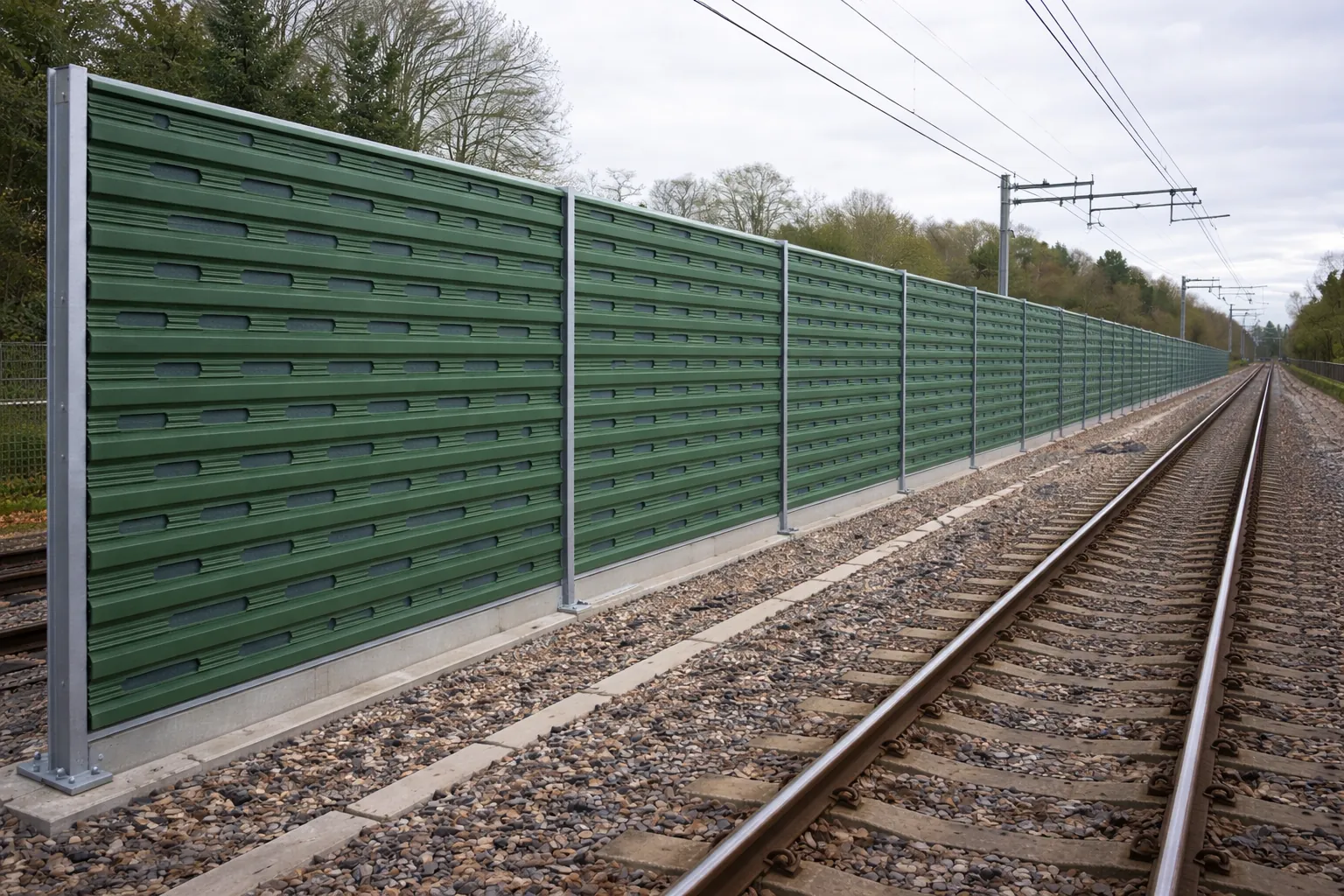
Air's modular acoustic barrier system delivers certified sound insulation performance of DLR = 29 dB (Air Absorb) and DLR = 28 dB (Air Reflect), tested to BS EN 1793-2:2012 for airborne sound insulation. Air Absorb additionally achieves up to DLα = 8 dB sound absorption under test conditions, providing enhanced performance for applications requiring both reflection and absorption characteristics. The modular cassette construction enables flexible installation approaches, targeted replacement of individual sections, and adaptation to varying site conditions without compromising overall system performance. Air's recycled PVC housings with mineral wool cores combine proven acoustic performance with circular material thinking, supporting sustainability objectives while maintaining structural integrity and weather resistance. UKCA and CE marking supported by BSI Report No. 30249272 provides regulatory compliance assurance for infrastructure projects requiring certified performance documentation. The modular design approach reduces installation complexity, enables phased construction integration, and supports maintenance access throughout the system's design lifespan of up to 40 years.
BS EN 1793-2
2012 certified acoustic performance testing
UKCA and CE marking supported by BSI report no. 30249272
Modular design reduces installation complexity and enables phased construction
Key idea: All performance figures from approved Air certification data
Highway, rail and industrial acoustic barrier considerations
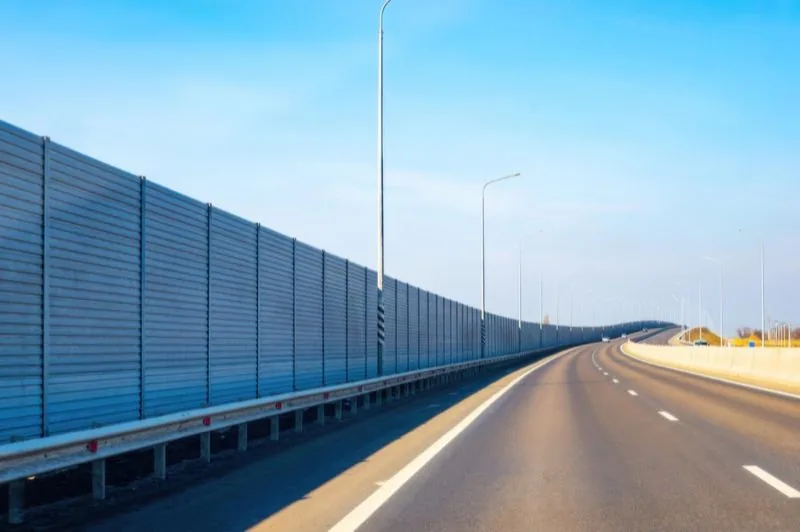
Highway and transport corridor applications typically require reflective acoustic barriers with high DLR performance to manage continuous traffic noise, with Air Reflect's DLR = 28 dB performance suitable for most highway noise reduction requirements. Rail infrastructure projects often benefit from absorptive characteristics to manage both rolling stock noise and reduce sound reflection toward adjacent properties, making Air Absorb's combined DLR = 29 dB and DLα = 8 dB performance particularly effective. Mixed-use developments and urban boundary applications require acoustic barriers that balance noise reduction with visual integration, community acceptance, and planning policy compliance, often favouring modular systems that enable future adaptation. Industrial, utilities and data centre applications may require enhanced acoustic performance for specific frequency ranges or intermittent noise sources, with Air's modular approach enabling targeted acoustic design for particular operational requirements. Sensitive receptor boundaries, including schools, healthcare facilities, and residential areas, often require both high acoustic performance and visual consideration, with Air's system design supporting both technical and community acceptance objectives. Site-specific factors including ground conditions, access constraints, and existing infrastructure influence acoustic barrier selection and installation approach, with modular systems providing greater flexibility for challenging site conditions.

- Air Reflect DLR = 28 dB suitable for highway noise reduction requirements
- Air Absorb combines DLR = 29 dB with DLα = 8 dB for rail applications
- Modular approach enables targeted acoustic design for specific requirements
Why it matters
Application guidance based on acoustic performance characteristics
Specification and planning guidance for developers
Acoustic barrier specification should begin with clear performance requirements based on noise assessment, receptor sensitivity, and planning policy requirements, typically expressed as minimum DLR values and any specific absorption requirements. BS EN 1793-2:2012 provides the standard framework for acoustic performance specification, with additional mechanical performance requirements addressed through BS EN 1794-1/2:2011 testing. Planning applications benefit from acoustic barrier proposals that demonstrate certified performance, visual integration, sustainability credentials, and community consultation outcomes, with Air's UKCA and CE marking providing regulatory compliance assurance. Installation sequencing should integrate with overall project construction programmes, with modular systems enabling flexible timing and reduced disruption to adjacent operations or communities. Specification documentation should address performance requirements, material composition, installation methods, maintenance access, and end-of-life considerations to support both planning approval and contractor procurement. Early engagement with acoustic consultants, planning authorities, and community representatives helps establish realistic performance expectations and design parameters that support successful project delivery.

- BS EN 1793-2:2012 for acoustic performance, BS EN 1794-1/2:2011 for mechanical performance
- Planning applications benefit from certified performance and sustainability credentials
- Early engagement with acoustic consultants and planning authorities supports successful delivery
Key idea: Standard specification approaches and regulatory requirements

BS EN 1793-2
BS EN 1793-2:2012 for acoustic performance, BS EN 1794-1/2:2011 for mechanical performance

Planning applications benefit from certified performance and sustainability credentials
Planning applications benefit from certified performance and sustainability credentials

Early engagement with acoustic consultants and planning authorities supports successful delivery
Early engagement with acoustic consultants and planning authorities supports successful delivery
Lifecycle value and maintenance considerations
Air's design lifespan of up to 40 years provides long-term value for infrastructure projects, with modular construction enabling targeted replacement of individual sections rather than complete system renewal. The recycled PVC housing material offers weather resistance and structural durability while supporting circular material thinking through material recovery potential at end-of-life. Modular cassette construction enables maintenance access to individual sections without disrupting overall system performance, reducing lifecycle maintenance costs and operational disruption. Performance monitoring throughout the system lifespan helps maintain acoustic effectiveness and identify any sections requiring attention, with Air's standardised cassette design enabling consistent replacement specifications. Circular material thinking extends beyond initial recycled content to include design for disassembly, material recovery, and potential system adaptation for changing site requirements over the project lifespan. Lifecycle cost analysis should consider initial specification costs, installation efficiency, maintenance requirements, and end-of-life material value to establish total project value rather than focusing solely on initial procurement costs.
- Modular cassette construction enables maintenance access without system disruption
- Circular material thinking includes design for disassembly and material recovery
- Lifecycle cost analysis should consider specification, installation, maintenance, and end-of-life value
Key idea: Air's stated design lifespan and modular construction benefits
Modular cassette construction enables maintenance access without system disruption
Modular cassette construction enables maintenance access without system disruption
Circular material thinking includes design for disassembly and material recovery
Circular material thinking includes design for disassembly and material recovery
Lifecycle cost analysis should consider specification, installation, maintenance, and end-of-life value
Lifecycle cost analysis should consider specification, installation, maintenance, and end-of-life value
Air acoustic barrier certification and performance
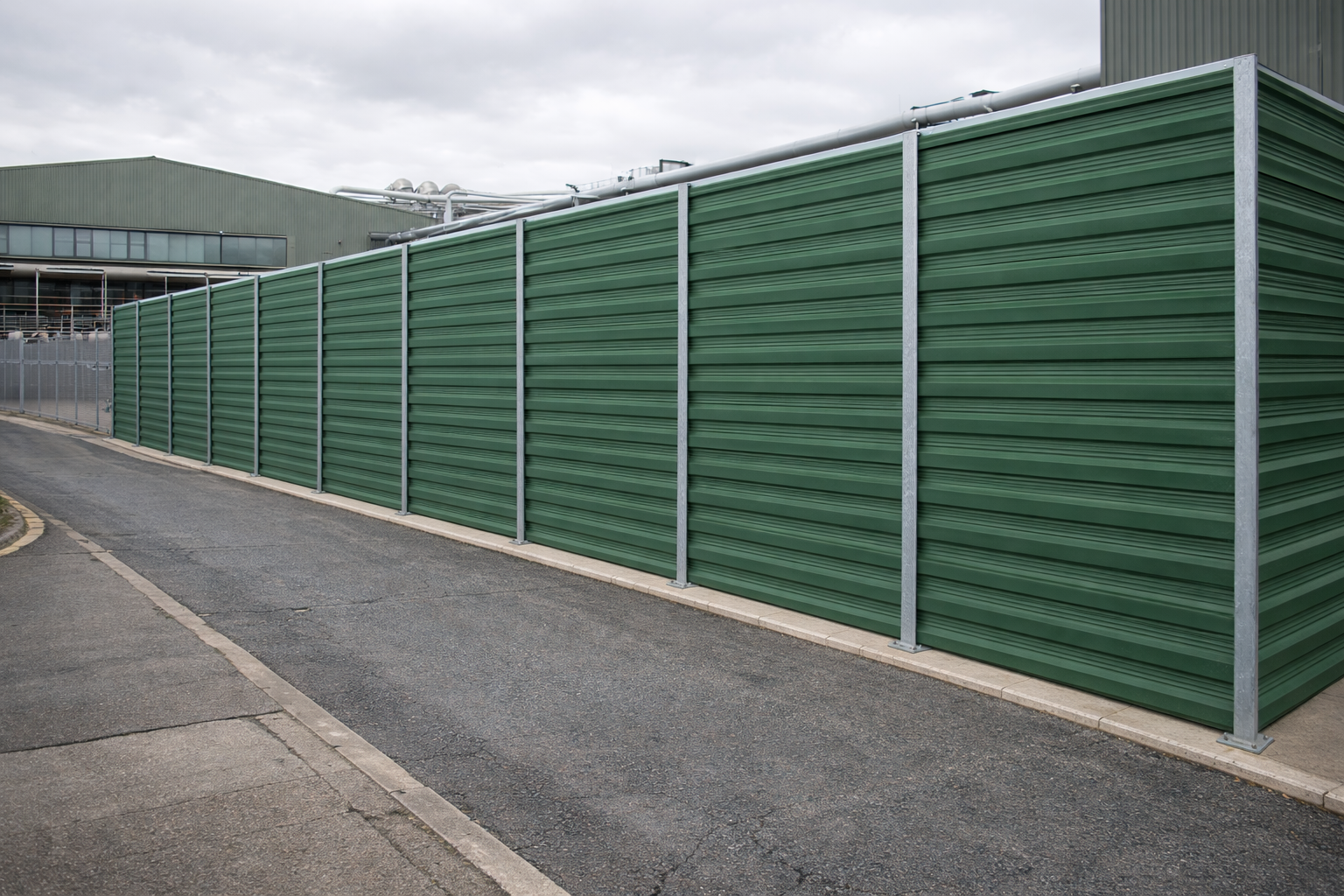
Air's acoustic performance is verified through independent testing to European standards.

| Evidence | Support | Use in specification |
|---|---|---|
| BS EN 1793-2:2012 testing | European standard for acoustic performance measurement | Reference standard for DLR performance requirements |
| BS EN 1794-1/2:2011 testing | European standard for mechanical performance | Structural and durability performance requirements |
| UKCA and CE marking | BSI Report No. 30249272 | Regulatory compliance documentation for planning applications |
FAQs
Answers to common questions about this topic. For project-specific guidance, contact the Air technical team.
What acoustic performance can Air barrier systems achieve?
How do modular acoustic barriers compare to traditional barrier systems?
What planning advantages do certified acoustic barriers provide?
How long do Air acoustic barrier systems last?
What maintenance do acoustic barrier systems require?
Can permanent external acoustic barriers be adapted for different infrastructure applications?
What sustainability features do Air barrier systems include?
How do acoustic barriers integrate with infrastructure construction programmes?
What specification standards apply to infrastructure acoustic barriers?
How do developers evaluate acoustic barrier lifecycle value?
In summary
Air's modular acoustic barrier systems provide developers with certified performance, planning advantages, and lifecycle value for infrastructure noise control projects. With DLR 28-29 dB sound insulation performance, UKCA and CE marking, and up to 40-year design lifespan, Air supports successful project delivery from planning approval through long-term operation.
Key takeaways
Discuss your project's acoustic barrier requirements
Download the product datasheet, open the certification resources, or speak to the technical team about project-specific requirements.
More insights
Browse the full Air insights library for technical guidance, standards and planning advice.